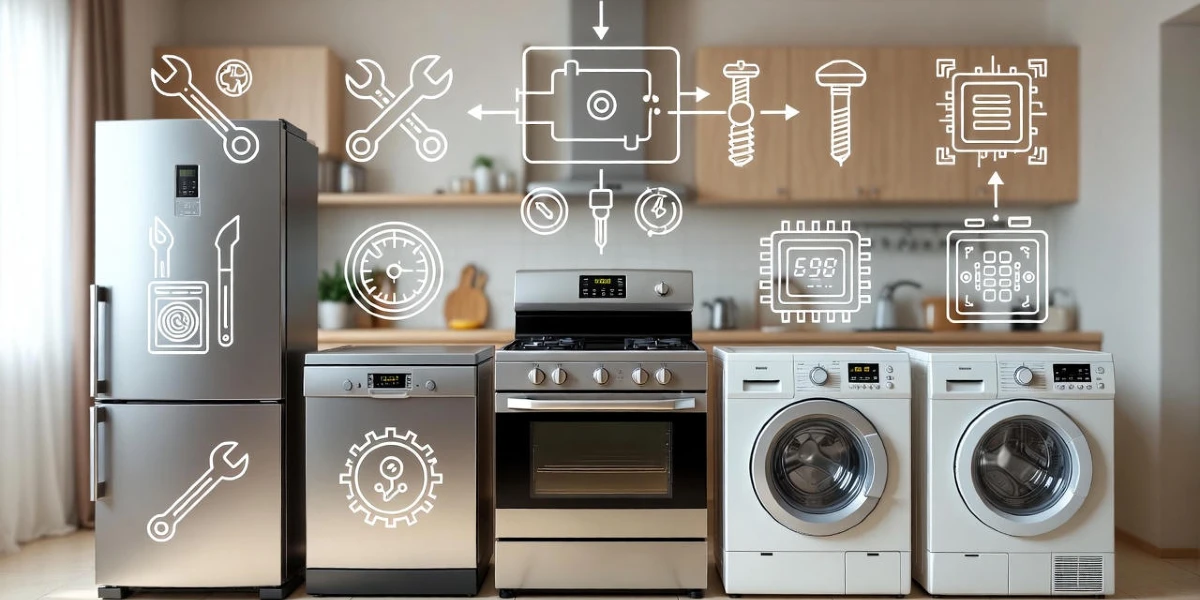
Smart appliances are internet-connected household devices that use sensors, software, and apps to automate tasks, monitor performance, and provide remote control. They can improve convenience and efficiency, but they also introduce new challenges such as higher repair costs, software issues, and dependence on connectivity. For homeowners, understanding how these appliances work—and their limitations—is essential before relying on them long-term.
Table of Contents
- Quick Summary
- What This Is & Why It Matters
- How It Works
- Typical Costs & Expectations
- Common Problems
- DIY vs Professional Repair
- Repair vs Replace
- Safety Considerations
- Pros and Cons
- Common Mistakes
- Who This Works Best For
- Who Should Avoid This
- FAQ
Quick Summary
- Smart appliances use WiFi, sensors, and apps to automate home tasks
- They offer convenience but can be more expensive to repair
- DIY repairs are limited due to software and proprietary parts
- Connectivity issues are one of the most common problems
- Professional help is often required for advanced diagnostics
- Best for homeowners who value convenience and tech integration
What This Is & Why It Matters
Smart appliances include refrigerators, ovens, washers, dryers, and robot vacuums that connect to the internet and communicate with apps or home systems. These devices go beyond basic functionality by offering features like remote control, energy monitoring, and predictive maintenance alerts.
This matters because while smart features can improve convenience, they also increase complexity. A traditional appliance failure might be mechanical, but a smart appliance failure can involve software, connectivity, or firmware issues. Understanding this difference helps homeowners make better decisions about purchasing, maintaining, and repairing these devices.
For a deeper look at how connectivity is changing longevity, see how IoT impacts appliance lifespan.
How It Works
Smart appliances operate using a combination of sensors, internal processors, and cloud-based systems. These components allow the appliance to collect data, communicate with apps, and respond to user commands.
For example, a smart refrigerator may track temperature changes, alert you when the door is left open, or notify you of maintenance needs. A smart washer may adjust cycles automatically based on load size and fabric type.
When problems occur, diagnosis often involves both hardware and software. This is why troubleshooting smart devices is different from traditional repairs. For step-by-step guidance, see troubleshooting WiFi-connected appliances.
Technicians may use diagnostic tools or manufacturer software to identify issues, which is one reason repairs can be more specialized and expensive.
Typical Costs & Expectations
Smart appliance repairs tend to cost more than traditional appliance repairs due to added complexity and parts.
- Minor fix (reset, connectivity issue): $75–$200
- Moderate repair (sensor, control board): $150–$400
- Major repair (main board, compressor, smart module): $400–$800+
Costs depend on factors such as brand, part availability, and whether proprietary software is involved. In many cases, a service call fee is charged even if no repair is completed.
Some newer models also rely on manufacturer-specific components, which can limit repair options. Learn more in which smart appliances are actually repairable.
Common Problems
Connectivity Issues
Smart appliances rely heavily on WiFi. If the connection drops, features may stop working or become unreliable. This is one of the most frequent issues reported by homeowners.
Software and Firmware Errors
Updates can sometimes cause glitches or compatibility issues. These problems may require resets or manufacturer intervention.
Component Failures
Smart refrigerators, for example, often experience issues with sensors, ice makers, or control boards. See common smart refrigerator problems for detailed examples.
Robot vacuums also display error codes that can be confusing without proper guidance. Learn more in robot vacuum error codes explained.
DIY vs Professional Repair
Some basic troubleshooting steps—like restarting the appliance, checking WiFi, or resetting the system—can be done at home. However, most smart appliance repairs require professional tools and expertise.
DIY is generally safe for:
- Resetting devices
- Checking connections
- Updating software
Professional repair is required for:
- Electrical components
- Control boards
- Internal diagnostics
Attempting advanced repairs without experience can lead to further damage or safety risks. For more guidance, see can you fix smart appliances yourself.
Repair vs Replace
When deciding whether to repair or replace a smart appliance, consider the 50% rule: if repair costs exceed 50% of the replacement value, replacement is often the better option.
Other factors include:
- Age of the appliance
- Frequency of breakdowns
- Availability of parts
- Technology becoming outdated
Smart appliances may become obsolete faster due to software support limitations, which is an important factor in long-term value.
Safety Considerations
Smart appliances introduce additional safety considerations beyond traditional risks.
- Electrical hazards from internal components
- Fire risks from overheating or malfunctioning parts
- Water damage from leaks in connected systems
- Data privacy concerns in connected devices
Always disconnect power before attempting any inspection and avoid opening sealed components.
Pros and Cons
Pros:
- Convenience and automation
- Energy efficiency tracking
- Remote monitoring and control
Cons:
- Higher repair costs
- Dependence on WiFi and software
- Limited DIY repair options
Common Mistakes
- Ignoring early warning alerts
- Assuming all issues are mechanical
- Attempting complex DIY repairs
- Choosing the cheapest repair without evaluating long-term cost
Who This Works Best For
Smart appliances are best for homeowners who value convenience, automation, and integration with smart home systems. They are especially useful in households where efficiency and remote control are priorities.
Who Should Avoid This
Homeowners who prefer simple, low-maintenance appliances or want to minimize repair costs may find smart appliances less practical. They may also not be ideal for those uncomfortable with troubleshooting technology.
Frequently Asked Questions
Are smart appliances more expensive to repair?
Yes, they typically cost more due to complex components and specialized parts.
Can smart appliances work without WiFi?
Most basic functions still work, but advanced features may not.
Do smart appliances last as long as traditional ones?
They can, but software and technology limitations may shorten practical lifespan.
Are smart appliances worth it?
They are worth it for convenience but may not be ideal for cost-conscious homeowners.
Can all smart appliances be repaired?
No, some models have limited repairability due to proprietary components.
Final Thoughts
Smart appliances offer clear advantages in convenience and automation, but they also introduce higher costs and complexity. For many homeowners, the decision comes down to balancing ease of use with long-term maintenance considerations. Understanding how these systems work—and their limitations—can help you make more informed, practical choices.