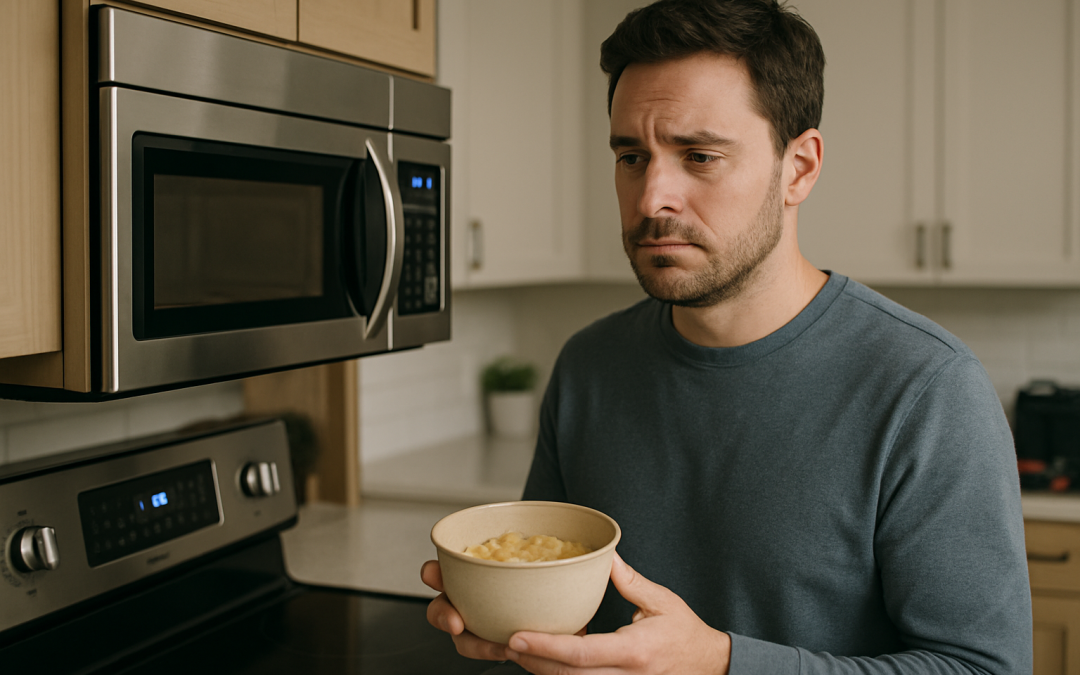
A microwave that turns on but does not heat food is one of the most common appliance failures in residential kitchens. It often creates confusion because the unit appears to be working normally—lights turn on, the turntable spins, and the timer counts down—but the food remains cold. This disconnect is almost always caused by an internal issue in the microwave’s high-voltage heating system rather than a simple user setting or external power problem.
A microwave not heating typically indicates a failure in the internal high-voltage components responsible for generating microwave energy, even though the appliance may still appear fully operational. In most cases, this involves parts such as the magnetron, capacitor, diode, fuse, or door interlock system. Some issues are minor and inexpensive to resolve, while others indicate core component failure where replacement becomes more practical than repair.
Table of Contents
- How to Confirm Your Microwave Is Not Heating Properly
- Quick Checks Before Assuming a Breakdown
- Most Common Causes of a Microwave Not Heating
- How the Heating System Actually Works
- When the Issue Is Repairable vs When It Is Not
- Repair vs Replacement Decision Guide
- How to Prevent Heating Failures
- FAQ
- Summary and Next Steps
How to Confirm Your Microwave Is Not Heating Properly
Before assuming a failure, it helps to confirm the exact symptoms. Many homeowners first notice the issue when food comes out unchanged after a full cycle.
Common signs include:
- Microwave runs normally but food stays cold
- Turntable spins and lights function as expected
- Timer counts down without temperature change
- Food heats inconsistently or only slightly warms
- Unit appears fully operational but produces no usable heat
This pattern strongly suggests the problem is isolated to the heating system rather than general power supply or user settings.
Quick Checks Before Assuming a Breakdown
There are a few safe, simple checks that can help rule out basic issues before considering internal failure.
- Verify the microwave is securely plugged in
- Try a different outlet to rule out power inconsistencies
- Ensure the door closes fully and latches properly
- Check that cooking time and power level are correctly set
- Test with a cup of water instead of solid food for consistency
If the microwave still runs without heating after these steps, the issue is almost certainly internal.
Most Common Causes of a Microwave Not Heating
Microwave heating depends on a high-voltage system that converts electricity into microwave energy. When one of these components fails, the appliance may still run but will not produce heat.
- Magnetron failure: The most common cause; responsible for generating microwave energy
- High-voltage diode failure: Prevents proper electrical conversion needed for heating
- Capacitor issues: Disrupt energy storage and delivery to the magnetron
- Blown internal fuse: Cuts power to heating components for safety
- Door switch malfunction: Prevents heating if the door is not properly detected as closed
Among these, magnetron failure is the most frequent and often determines whether repair is cost-effective.
How the Heating System Actually Works
A microwave does not generate heat like an oven. Instead, it uses high-voltage electricity to power a magnetron, which emits microwave radiation that excites water molecules in food, producing heat.
If any part of this chain is disrupted, the microwave may still operate visually but fail to heat entirely. This is why symptoms often feel misleading—everything looks normal except the actual cooking performance.
The key takeaway is simple: if the microwave runs but does not heat, the issue is almost always in the high-voltage system, not user input.
When the Issue Is Repairable vs When It Is Not
Some microwave issues are minor and repairable, while others indicate deeper component failure.
Generally:
- Minor issues (fuses, door switches) are usually repairable at low cost
- Moderate issues (diode or capacitor replacement) may still be worth repairing depending on appliance age
- Major issues (magnetron or inverter failure) often approach replacement cost
If the microwave is older or already showing multiple performance issues, replacement may be the more practical option.
Repair vs Replacement Decision Guide
The decision to repair or replace depends on both cost and appliance condition, not just the symptom itself.
Repair may make sense when:
- The microwave is relatively new
- The issue is isolated to a single component
- The repair cost is significantly lower than replacement
Replacement may be more practical when:
- The magnetron or high-voltage system has failed
- Multiple components are wearing out
- The microwave is nearing end-of-life (typically 7–10 years)
In many real-world cases, homeowners discover that full high-voltage repairs are close enough in cost to a new unit that replacement becomes the better long-term decision.
How to Prevent Microwave Heating Failures
While some failures are unavoidable due to age and wear, proper usage can extend appliance lifespan.
- Avoid running the microwave empty
- Do not slam or force the door shut
- Keep interior clean to prevent heat and residue buildup
- Use microwave-safe containers only
- Avoid repeated long high-power cycles without breaks
These habits reduce stress on high-voltage components and improve long-term reliability.
FAQ
Why is my microwave running but not heating?
This usually indicates a failure in the high-voltage system, such as the magnetron, diode, capacitor, or door switch.
Can a microwave be fixed if it is not heating?
Yes, but it depends on the failed component. Some repairs are inexpensive, while others may not be cost-effective compared to replacement.
Is it safe to keep using a microwave that doesn’t heat?
It is generally not recommended, especially if there are unusual noises, burning smells, or electrical inconsistencies.
What is the most common cause of this issue?
The magnetron is the most common component to fail when a microwave stops heating.
How long should a microwave last?
Most microwaves last around 7–10 years depending on usage and maintenance.
Summary and Next Steps
A microwave that runs but does not heat is almost always experiencing a high-voltage system failure rather than a user error or external power issue. While basic checks can rule out simple causes, most persistent heating failures require component-level diagnosis.
The next step is determining whether the issue is minor and repairable or whether replacement is more cost-effective based on the appliance’s age and condition. In many cases, professional diagnosis provides the fastest path to a clear decision and prevents unnecessary spending on ineffective repairs.
Understanding these symptoms early helps homeowners avoid trial-and-error troubleshooting and move directly toward the most practical solution.