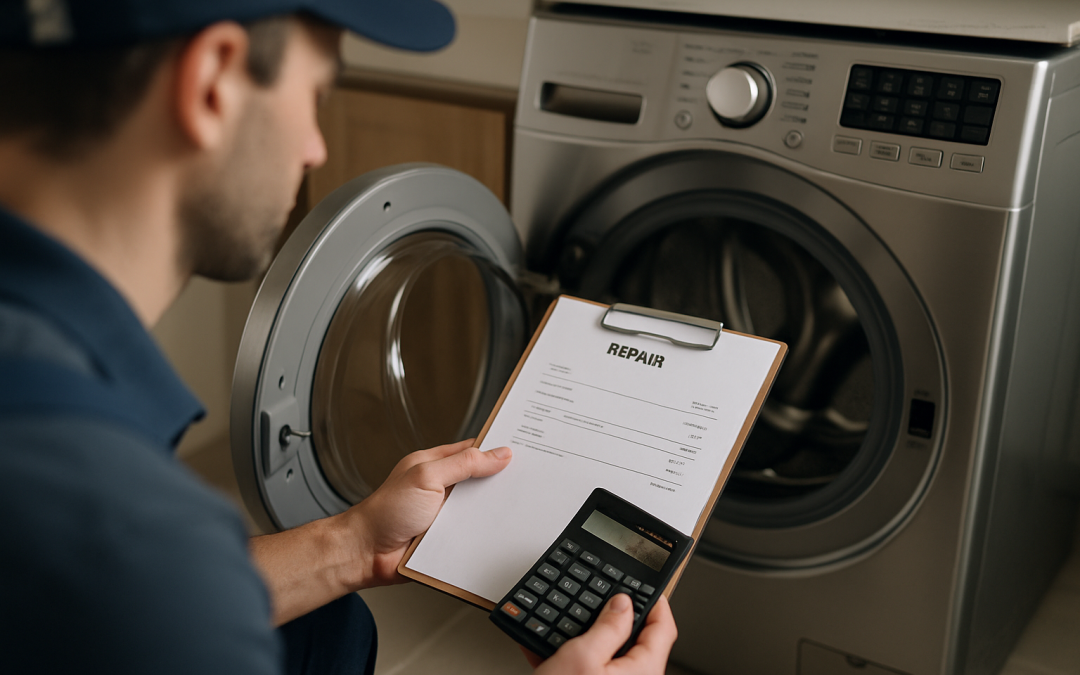
Appliance repair costs are too high to justify when the price of fixing the unit comes close to, equals, or exceeds the value and remaining life of the appliance. In many cases, if a repair is more than 50% of the cost of a comparable new model, replacement is usually the smarter long-term choice. You should also be cautious when repeated repairs, hard-to-find parts, or very old equipment drive the price up. Every situation is a little different, so it helps to look at age, reliability, and total costs together before deciding.
If you are staring at a repair estimate and wondering if it is worth it, you are not alone. Homeowners and renters often struggle to decide whether to repair or replace a broken refrigerator, washer, dryer, or oven. This guide walks you through clear signs that your appliance repair cost may be too high and helps you make a confident, practical decision.
Table of Contents
- What It Means When Appliance Repair Costs Feel Too High
- 5 Signs Your Appliance Repair Cost Is Too High to Justify
- Typical Appliance Repair Cost Expectations
- What to Check First Before Approving an Expensive Repair
- When a High Repair Cost Signals a Serious Problem
- Repair vs. Replace: How to Decide
- How to Avoid Overpaying for Appliance Repairs in the Future
- Safety Risks of Delaying or Avoiding Needed Repairs
- Frequently Asked Questions
- Summary and Next Steps
What It Means When Appliance Repair Costs Feel Too High
Feeling like a repair quote is “too high” usually means one of three things:
- The repair cost is close to or more than half the price of a new appliance.
- The appliance is old enough that you may not get many more years out of it.
- You are seeing repeated breakdowns that add up over time.
In these situations, you are not just paying for one repair; you are investing more money into something that may not last. The goal is to avoid throwing good money after bad when replacement would be more cost-effective and less stressful.
5 Signs Your Appliance Repair Cost Is Too High to Justify
1. The Repair Is More Than 50% of the Cost of a New Appliance
A common rule of thumb used by many professionals is the “50% rule.” If the repair estimate is more than half the cost of a similar new appliance, replacement usually makes more sense.
For example:
- New mid-range dishwasher: about $600–$900
- Repair estimate: $400–$500 for major parts and labor
In this case, putting $400–$500 into an older unit is often harder to justify when a brand-new model with a warranty is not much more.
2. Your Appliance Is Near or Past Its Typical Lifespan
Even a reasonable repair price can be too high if the appliance is already near the end of its expected life. You may pay for a big repair and still face another breakdown soon.
Typical lifespans (approximate):
- Refrigerator: 10–15 years
- Dishwasher: 8–12 years
- Washing machine: 8–12 years
- Dryer: 10–13 years
- Electric range/oven: 13–17 years
- Gas range/oven: 15–19 years
- Microwave: 7–10 years
If your appliance is at or beyond these ranges and needs a major repair, the cost is often hard to justify.
3. You Are Paying for the Same or Similar Repair More Than Once
Repeated repairs are a strong sign that your appliance is becoming unreliable. Even if each individual repair is not extremely expensive, the total cost over a year or two can easily exceed the price of a new unit.
Warning signs include:
- Multiple service calls for the same issue (e.g., not draining, not cooling, not spinning).
- Different parts failing one after another on an older appliance.
- Frequent “band-aid” fixes that do not last long.
When you add up what you have already spent and what you are being asked to spend now, the repair may no longer be worth it.
4. Parts Are Hard to Find, Backordered, or Discontinued
When parts are rare or discontinued, repair costs often climb. Technicians may need extra time to source parts, and those parts can be more expensive.
This can lead to:
- Higher parts prices due to limited supply.
- Long wait times with your appliance out of service.
- Uncertainty about future repairs if other parts fail.
If your quote is high mainly because parts are rare or obsolete, that is a strong sign the appliance is nearing the end of its practical life.
5. The Repair Does Not Come With a Clear Warranty or Guarantee
A high repair cost without a solid warranty is risky. You could pay hundreds of dollars and have little protection if the same problem returns.
Be cautious if:
- The repair warranty is less than 30–90 days.
- The warranty only covers labor but not parts, or vice versa.
- The technician cannot clearly explain what is covered and for how long.
A high price should come with clear terms and a reasonable guarantee. If it does not, the cost may not be worth it.
Typical Appliance Repair Cost Expectations
Understanding normal price ranges can help you spot when a repair cost seems too high. Actual prices vary by location, brand, and problem, but these ranges are common:
- Service call / diagnostic fee: $75–$150 (often applied toward the repair if you proceed)
- Minor repair: $75–$200 (simple parts like switches, hoses, belts, or minor adjustments)
- Moderate repair: $150–$400 (motors, pumps, control boards, heating elements)
- Major repair: $400–$800+ (compressors, sealed system work, multiple parts, or complex labor)
Costs are affected by:
- Appliance type: Refrigerators and high-end units usually cost more to repair than basic washers or microwaves.
- Brand and model: Premium or imported brands often have more expensive parts.
- Labor rates: Urban areas and emergency or after-hours service can increase labor costs.
- Complexity: Built-in units or stacked setups may require more time to access and repair.
For a deeper breakdown of typical pricing, you can review this detailed overview of appliance repair costs.
What to Check First Before Approving an Expensive Repair
Before you agree to a high repair bill, there are a few safe, simple steps you can take to confirm the estimate makes sense.
1. Confirm the Age and Original Cost of the Appliance
- Look for the model and serial number tag (often inside the door frame or on the back).
- Check your purchase receipt or online account if you bought it from a major retailer.
- Estimate the original price and compare it to the repair quote and current replacement cost.
2. Get a Second Opinion or Competing Estimate
If the quote feels high, it is reasonable to get another estimate from a different reputable technician. This can confirm whether the diagnosis and price are in line with typical rates.
When comparing estimates, look at:
- Diagnosis and parts being replaced.
- Labor charges and service fees.
- Warranty length and what it covers.
3. Ask for a Clear Breakdown of Parts and Labor
A trustworthy technician should be willing to explain:
- Which part failed and why it needs replacement.
- The cost of each part and the labor time involved.
- Any alternative options (for example, repairing vs. replacing a sub-assembly).
If the explanation is vague or rushed, that is another reason to pause before approving a large repair.
4. Rule Out Simple, Non-Technical Issues
There are a few basic checks that are safe for most homeowners and may prevent unnecessary repairs:
- Make sure the appliance is plugged in securely and the outlet is working.
- Check your home’s breaker panel for a tripped breaker.
- Verify that water supply valves (for washers and dishwashers) are fully open.
- Clean easily accessible filters and lint traps according to the manual.
Do not open panels, handle wiring, or work on gas connections yourself. For more safe first steps, see this general appliance troubleshooting guide.
When a High Repair Cost Signals a Serious Problem
Sometimes a high repair estimate reflects a genuinely serious issue that is expensive to fix. In these cases, the cost may be high but justified from a technical standpoint, even if replacement is still the smarter choice.
Examples of Serious, High-Cost Problems
- Refrigerator compressor failure: Often $600–$1,000+; may not be worth it on older units.
- Sealed system leaks in refrigerators: Complex, time-consuming, and costly to repair.
- Control board failures in premium appliances: Parts alone can be several hundred dollars.
- Major drum or tub issues in washers: Often require extensive disassembly and high labor costs.
When to Take a High Quote Seriously
Even if the price is high, you should take the issue seriously if:
- The technician explains the failure clearly and shows you the problem if possible.
- The appliance is relatively new and still within or just outside warranty.
- The appliance is built-in or specialty (for example, built-in fridge, high-end range) where replacement is also expensive.
In these cases, a high repair cost may still be the better option compared to a very expensive replacement.
Repair vs. Replace: How to Decide
Deciding whether to repair or replace comes down to a few key factors: cost, age, reliability, and your long-term plans for the home.
Use the 50% Rule as a Starting Point
Ask yourself:
- Is the repair more than 50% of the cost of a similar new appliance?
- Is the appliance more than halfway through its typical lifespan?
If the answer to both is “yes,” replacement is usually the better financial decision.
Consider How Often You Use the Appliance
Heavily used appliances (like a family washer, dryer, or main refrigerator) need to be reliable. If they are breaking down often, the stress and inconvenience add to the real cost.
- For essential, daily-use appliances, lean more toward replacement if reliability is in doubt.
- For secondary or rarely used units (like a garage fridge), a repair might be acceptable even on an older unit if the cost is modest.
Factor in Energy Efficiency and Features
Newer appliances are often more energy-efficient and may offer better performance and features. Over time, lower utility bills and improved reliability can offset the cost of replacement.
If your current appliance is very old and inefficient, a high repair cost is even harder to justify compared to upgrading. For more guidance on long-term value, see this overview of when to replace appliances.
Think About Your Housing Plans
- If you plan to stay in your home for several years, investing in a new, reliable appliance often makes sense.
- If you plan to move soon, a lower-cost repair might be enough to keep things running until you sell or relocate.
Can You Fix This Yourself?
Most major repairs involving electricity, gas, sealed systems, or internal components should be left to professionals. However, some small issues can sometimes be handled by homeowners, such as:
- Replacing simple, external parts like water filters, light bulbs, or easily accessible shelves and drawers.
- Cleaning filters, vents, and lint traps according to the manual.
- Resetting tripped breakers or checking for obvious power issues.
Do not attempt repairs that require opening panels, working with wiring, or handling gas lines. The risk of shock, fire, gas leaks, or water damage is not worth the potential savings.
When to Call a Technician
You should call a qualified appliance repair technician when:
- The appliance is not powering on and basic checks (outlet, breaker) do not solve it.
- You smell burning, see sparks, or notice scorch marks.
- There are leaks, unusual noises, or strong odors from gas or electrical components.
- The problem involves internal parts, wiring, motors, compressors, or control boards.
A professional can provide a safe diagnosis, a written estimate, and advice on whether repair or replacement is the better choice.
How to Avoid Overpaying for Appliance Repairs in the Future
While you cannot prevent every breakdown, good habits can reduce the number of major repairs and help you avoid paying for problems that could have been prevented.
1. Keep Up with Basic Maintenance
Simple, regular maintenance can extend the life of your appliances and reduce the chance of expensive failures:
- Clean dryer lint filters and vents regularly to prevent overheating.
- Keep refrigerator coils clean and ensure good airflow around the unit.
- Use the right detergents and avoid overloading washers and dishwashers.
- Check and replace water filters as recommended by the manufacturer.
Consistent care can prevent many common issues that lead to costly service calls. For more ideas, review these appliance maintenance tips.
2. Address Small Problems Early
Do not ignore early warning signs such as strange noises, longer cycle times, small leaks, or inconsistent temperatures. These can be early indicators of a part starting to fail.
Fixing a small issue early is usually cheaper than waiting until it causes a major breakdown that requires multiple parts or extensive labor.
3. Use Appliances as Intended
Misuse is a common cause of avoidable damage. To protect your investment:
- Follow load size recommendations for washers and dryers.
- Avoid using ovens or stovetops for storage.
- Do not slam doors or overload shelves and racks.
- Use the correct settings for the type of load or food you are preparing.
4. Choose Reliable Brands and Models
When it is time to replace an appliance, research reliability ratings and reviews. Some brands and models have better track records for durability and easier-to-find parts.
A slightly higher upfront cost for a reliable model can save you from multiple repair bills later.
Safety Risks of Delaying or Avoiding Needed Repairs
Trying to avoid a high repair bill by ignoring a serious problem can create safety risks and lead to even more expensive damage.
Potential Safety Concerns
- Electrical hazards: Faulty wiring, overheating components, or short circuits can cause shocks or fires.
- Water damage: Leaking washers, dishwashers, or refrigerators can damage floors, cabinets, and nearby walls, leading to mold and costly repairs.
- Gas leaks: Malfunctioning gas ranges, ovens, or dryers can create fire or carbon monoxide risks.
- Overheating: Blocked vents or failing motors can overheat and potentially ignite nearby materials.
When You Should Stop Using the Appliance Immediately
Turn off and stop using the appliance and call a professional if you notice:
- Burning smells, smoke, or visible sparks.
- Strong gas odors or hissing sounds near gas connections.
- Water pooling around the appliance that continues even when it is off.
- Repeated tripping of breakers when the appliance runs.
In these situations, safety comes first. Do not attempt to keep using the appliance to “get your money’s worth” out of it.
Frequently Asked Questions
How do I know if my appliance repair cost is too high?
A repair cost is likely too high if it is more than 50% of the price of a similar new appliance and your unit is more than halfway through its typical lifespan. It is also a red flag if the appliance has needed several repairs recently or if parts are hard to find and very expensive.
Is it worth repairing a 10-year-old refrigerator?
It depends on the condition, brand, and repair cost. If the repair is minor and the fridge has been reliable, it may be worth fixing; if the repair is several hundred dollars and the unit is 10–15 years old, replacement often makes more sense.
Should I repair or replace my washing machine?
Compare the repair estimate to the cost of a new washer and consider the age of your current machine. If the repair is under 50% of a new unit and the washer is under 8–10 years old, repair is often reasonable; beyond that, replacement is usually the better long-term choice.
Why are appliance repairs so expensive?
Repair costs include the technician’s time, travel, diagnostic skills, and the price of parts, which can be high for certain brands or complex components. Built-in or premium appliances can also take longer to access and repair, increasing labor costs.
Can I negotiate an appliance repair estimate?
You can politely ask for a breakdown of parts and labor and see if there are any alternative repair options. While many companies have set pricing, getting a second estimate can give you leverage or confirm that the quote is fair.
Is it safe to keep using an appliance that needs a major repair?
In many cases, no. Continuing to use an appliance with electrical, gas, or serious mechanical issues can create fire, shock, leak, or gas hazards. If a technician advises that the appliance is unsafe, stop using it until it is repaired or replaced.
Summary and Next Steps
Your appliance repair cost is probably too high to justify if the estimate is more than half the price of a new unit, the appliance is near the end of its lifespan, or you are facing repeated breakdowns and hard-to-find parts. In those situations, replacement often provides better value, reliability, and peace of mind.
Before deciding, confirm the age and value of your appliance, get a clear written estimate, and consider a second opinion for very high quotes. Weigh the cost, age, reliability, and safety together to choose the option that best protects your home and budget.
If you are unsure whether to repair or replace, start by getting a professional diagnosis and a detailed estimate from a qualified technician. Avoid risky DIY work on electrical or gas appliances, and do not ignore signs of serious problems. A calm, informed decision now can save you from bigger expenses and safety issues later.